
The Screen Time Talk That Actually Works (And Why Punishment Backfires)
By Simone Mazloumian | Eklektik Mama
Real talk about modern parenting challenges—no judgment, just solidarity.
Mum guilt has evolved.
2020: "Am I giving my kids enough screen time boundaries?"
2025: "Am I teaching them healthy tech habits without shame?"
The shift is subtle but massive. And if you're still operating from the 2020 playbook of restrictions, timers, and taking devices away as punishment, you're not just behind the times—you might actually be making things worse.
Here's what the research is saying now, and why we need a new conversation.

The Problem with Punishment-Based Screen Time
New studies are showing what many of us suspected: using screen time restriction as punishment backfires spectacularly.
Here's why:
1. It Creates Sneaky Behaviour
When screens become the ultimate reward/punishment lever, kids learn to:
Hide their usage
Delete browser history
Create secret accounts
Watch content on friends' devices
You haven't reduced screen time. You've just lost visibility into what they're actually doing.
2. It Erodes Trust
Every time you use device access as a bargaining chip ("No iPad until you finish your homework"), you're teaching your child that:
Trust is transactional
You're the obstacle between them and what they want
They need to manage around you, not with you
This doesn't build the relationship you want when they're teenagers facing actual risks online.
3. It Misses the Real Issue
Screens aren't the problem. Screens are the symptom.
When a child is glued to a device, they're usually:
Bored and under-stimulated
Avoiding something difficult (homework, emotions, social anxiety)
Seeking connection or validation they're not getting elsewhere
Regulating their nervous system (yes, scrolling can be soothing)
Taking the screen away doesn't address any of those underlying needs.
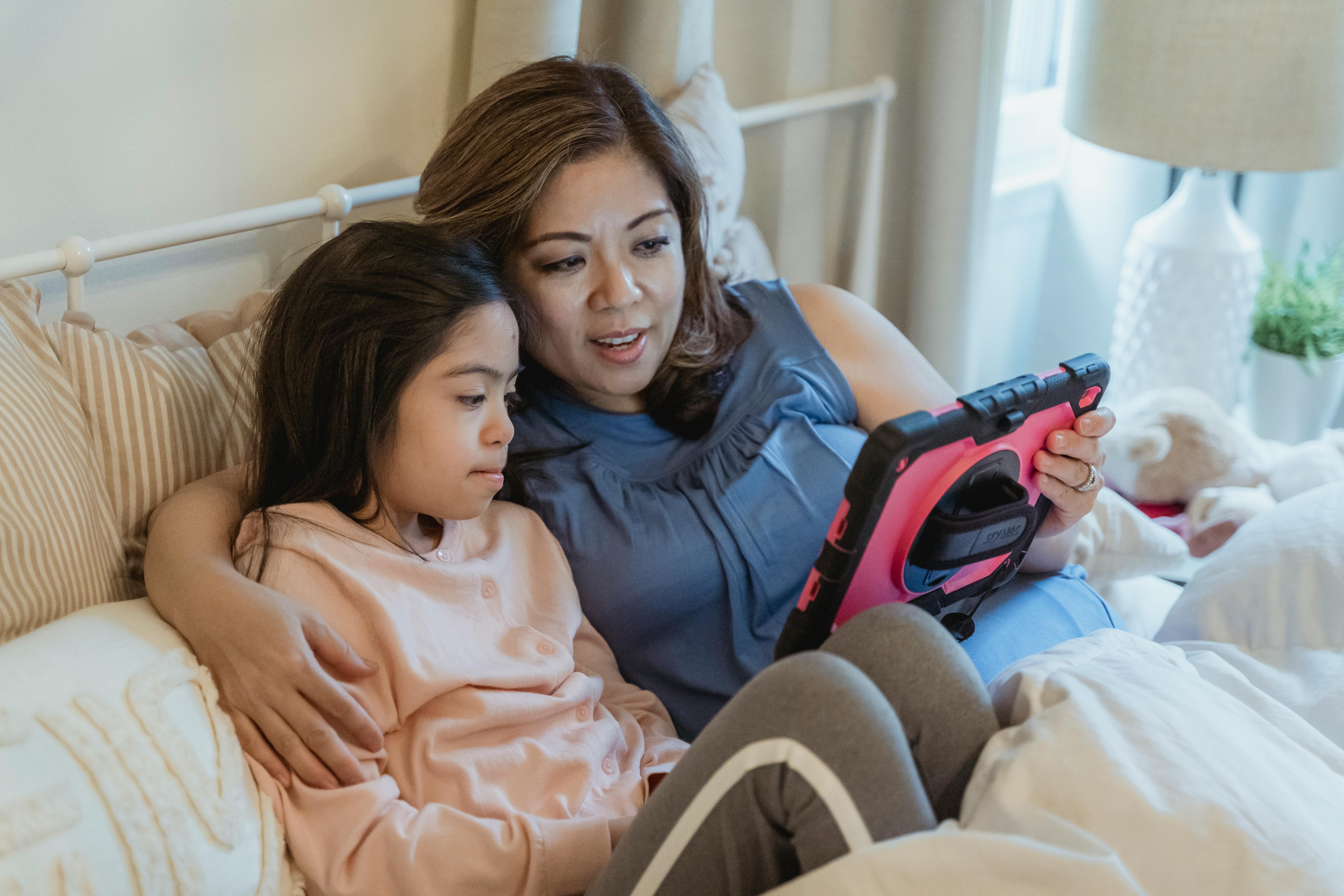
What Actually Works: The Navigation Approach
Instead of restriction, modern child development experts recommend teaching navigation.
Think of it like road safety:
Old approach: "Never go near the road" (avoidance)
New approach: "Let me teach you how to cross safely" (skills)
Screens are part of their world. Teaching them to navigate technology safely > pretending it doesn't exist.
Here's how to apply this to screens:
1. Talk Openly About Why We Use Screens
Have actual conversations:
"Why do you think people scroll TikTok?" "What do you get from watching YouTube?" "How do you feel after playing that game for an hour?"
Let them articulate what screens give them: entertainment, connection, escape, achievement, boredom relief.
Then share your own relationship with screens:
"I scroll Instagram when I'm avoiding something difficult." "I watch Netflix to zone out after a long day." "Sometimes I use my phone to avoid uncomfortable conversations."
This vulnerability teaches them screens are tools we ALL navigate, not something only kids need to be controlled around.
2. Set Boundaries Together (Not At Them)
Instead of: "No screens after 8pm"
Try: "We're all struggling to sleep well. What screen habits do you think might be affecting our sleep? What boundaries make sense?"
When kids participate in creating the rules:
They're more likely to follow them
They develop critical thinking about their habits
They learn to self-regulate (the actual goal)
Yes, you still have final say. But collaboration beats dictation every time.
3. Model the Behaviour You Want to See
This is the hard one.
If you're:
On your phone during dinner
Scrolling while your kid is trying to talk to you
Using screens to escape discomfort
Breaking your own "rules"
…they're learning that screens are exactly as addictive and problematic as you claim.
Kids don't do what we say. They do what we do.
If you want them to have a healthy relationship with technology, you need to model it. And that means examining your own habits first.

The Conversations to Have (With Actual Scripts)
Here are real scripts for different ages:
Ages 5-8: Foundation Building
"Screens are tools, like hammers. Really useful for some things, not great for others. Let's figure out together when screens help us and when they don't."
Focus on feelings:
"How does your body feel after an hour of iPad?"
"Do you feel happy or frustrated after playing that game?"
"What else could we do that might feel good?"
Ages 9-12: Critical Thinking
"Apps and games are designed to keep you watching. The companies make money when you stay longer. Knowing that, how do you want to use them?"
Teach awareness:
"Notice when you pick up your device without deciding to"
"What triggers make you want to scroll?"
"How do you feel seeing other people's perfect posts?"
Ages 13+: Autonomy with Accountability
"You're old enough to manage your own screen time, but let's check in weekly about how it's affecting your sleep, mood, and responsibilities."
Focus on self-regulation:
"What screen habits are you proud of?"
"What would you like to change?"
"How can I support you without controlling you?"
What This Looks Like in Real Life
Scenario: Your 10-year-old wants to watch YouTube for the third hour today while you're trying to prep dinner.
Old approach: "No! You've had enough screen time. Go outside." Result: Tantrum, resentment, sneaking the iPad later
New approach: "You've been watching for a while. Check in with your body—do you feel energized or kind of blah? What else might feel good right now?" Result: You're teaching self-awareness, not enforcing arbitrary rules
Scenario: Your teen is on their phone during family dinner.
Old approach: "Put that away NOW or I'm taking it for the week." Result: Compliance with resentment, no behaviour change
New approach: "I notice we're all on devices during dinner lately, including me. What if we all put phones in another room for 20 minutes? I miss actually talking to you." Result: Shared responsibility, connection over control
The Nuance Nobody Talks About
Here's the uncomfortable truth: Some screen time guilt is actually just control disguised as care.
We convince ourselves we're "protecting" our kids from screens when actually we're:
Uncomfortable with our own lack of control
Projecting our phone addiction onto them
Following parenting trends without questioning them
Performing "good parenting" for other adults
Before you implement any screen time strategy, ask yourself:
"Is this about my child's wellbeing, or my anxiety about being judged as a parent?"
Because if it's the latter, your kid will feel that. And they'll resent it.
What Success Actually Looks Like
You're not aiming for zero screen time (unrealistic and unnecessary).
You're aiming for:
✓ Kids who can identify when screens are helping vs. hurting
✓ Open conversations about what they're watching/playing
✓ Self-regulation skills that transfer to other areas
✓ Trust that allows them to come to you with online problems
✓ Critical thinking about media, algorithms, and digital manipulation
That's the goal. Not perfect adherence to arbitrary time limits.
Your Challenge This Week
Pick ONE of these to try:
Have a vulnerable conversation about your own screen habits
Ask your child to help create one screen boundary together
Notice when you reach for punishment/restriction and try curiosity instead
Model one day of intentional device use (put phone away during pickup, dinner, bedtime)
You're not going to get this perfect. Neither am I. Neither is any parent anywhere.
But shifting from control to collaboration? That's the conversation our digital-native kids actually need.
Keep Reading:
The Gift of Divorce - The Reason My Ex-Husband is my Best Friend
Money = Power - Why Financial Education is Every Woman's Non Negotiable
Why I Love Back To School - And Don't Feel Guilty About It
This Is Where the Real Conversations Happen
Tired of picture-perfect parenting advice? If you're looking to meet mums in Abu Dhabi who keep it real, we've built something different.
Want In?
Abu Dhabi Events - Baby-friendly fitness, coffee mornings, and mum meet-ups
Weekly Newsletter - Honest takes on motherhood, mum hacks and fun straight to your inbox
Eklektik AF Membership - 49 AED/month for monthly meet-ups, event discounts, WhatsApp group access and secret experiences
Merch - Wearable motherhood is a vibe
Instagram @eklektikmama - DM us your screen time wins/struggles
This blog was written for UAE mums navigating modern parenting challenges. Looking for judgment-free parenting support in the UAE? Join our community.
About Eklektik Mama | Baby-friendly events and judgment-free spaces for mums and parents done with perfectionism
Based in Abu Dhabi | Serving UAE Mums | Zero Tolerance for Mum-Shaming
Instagram | Weekly Newsletter | Abu Dhabi Events | Membership | Merch